AI Isn’t Coming for Your Trade — That’s Actually Your Advantage
AI can’t automate plumbing, electrical, or roofing work. That safety is exactly what makes trades one of the best-positioned industries to benefit from AI — here’s why.
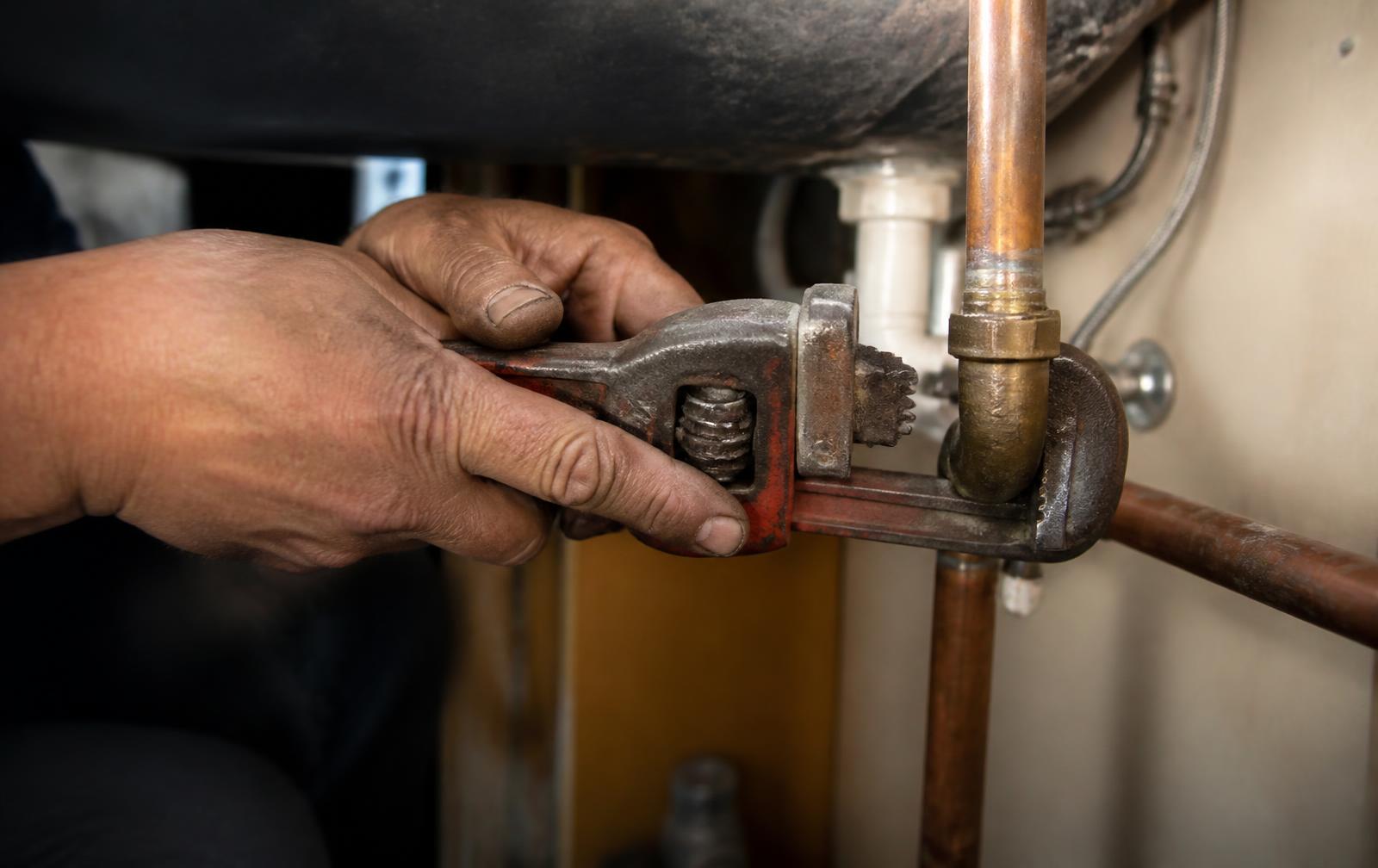
Quick answer: No, AI is not going to replace plumbers, electricians, roofers, or other trades workers — the hands-on physical work isn’t something AI can perform. That’s actually what makes the trades one of the best-positioned industries to benefit from AI: because the job itself is safe, owners are free to use AI on everything around the job — quoting, follow-up, scheduling, and admin — without any risk to the trade itself.
Every few months, another headline warns that AI is coming for someone’s job. Truck drivers. Customer service reps. Paralegals. Copywriters.
Plumbers don’t make that list. Neither do electricians, roofers, HVAC techs, or general contractors. And that’s not an oversight — it’s the whole point of this article.
Nobody is building a robot to crawl under a kitchen sink. Nobody is automating a re-pipe, a panel upgrade, or a roof tear-off. The physical, hands-on work that defines the trades is about as insulated from AI as any job in the American economy. That’s just true, and it’s worth saying plainly instead of dancing around it.
Which raises an obvious question: if AI can’t touch the actual work, why should a contractor care about it at all?
Because “the job” isn’t the only thing running your business
Ask any trades owner what actually eats their week, and the wrench work is rarely the complaint. It’s everything wrapped around it:
- The estimate that should’ve gone out Tuesday night but got pushed to Thursday.
- The phone that rang while you were on a roof — and the customer who called the next guy instead of leaving a voicemail.
- The reviews you meant to ask for and never did.
- The invoice that’s still sitting in a truck console three weeks after the job wrapped.
None of that is the trade. All of it is the tax you pay for running a business in the trade. And that tax is exactly where AI earns its keep — not by touching the physical work, but by handling the administrative weight around it. Executives across industries report spending roughly sixteen hours a week on manual admin — two full workdays that could otherwise go toward selling, quoting, or getting home for dinner.
The safety of your trade is what makes this your advantage
Here’s the reframe that most conversations about “AI and the trades” miss entirely: because your actual job is safe from automation, you’re free to use AI aggressively on everything that isn’t your job — without the anxiety that comes with adopting new tech in an industry where the tool itself might replace you.
A contractor doesn’t have to weigh “should I use this AI tool” against “will this AI tool eventually take my role.” That tension is real in a lot of industries right now. It doesn’t exist in the trades. The wrench work stays exactly as human as it’s always been. That frees an owner to hand off the busywork without a second thought — the quoting, the follow-up, the review requests, the scheduling — and keep the actual craft for the humans doing it, which is where it was always going to stay anyway.
That combination — a trade that can’t be automated, paired with a mountain of admin work that absolutely can — is what makes the trades one of the best-positioned industries in the country to benefit from AI. Not one of the most at risk. One of the best set up to win.
What this looks like in practice
It’s not glamorous. It’s not a robot assistant or a talking dashboard. It looks like:
- A voice memo recorded on the drive back to the shop that comes back as a formatted, ready-to-send estimate.
- A missed call that gets an automatic text-back in seconds instead of going to voicemail nobody checks.
- A review request that goes out the moment a job is marked complete, instead of “whenever I remember to ask.”
- A bookkeeping system that reconciles itself instead of eating a Sunday afternoon before it goes to the CPA.
None of that replaces a single hour of skilled labor. All of it replaces the invisible second job most owners are working without realizing it — the one that happens after the truck’s parked for the night.
Use AI for the busywork. Keep the wrench work human.
That’s the whole idea, stated as plainly as it can be. Contractors who adopt AI aren’t handing off their craft — they’re handing off the parts of the business that were never the craft to begin with. The trade stays exactly as human, as skilled, and as necessary as it’s always been. What changes is how much of the week is spent actually doing it, versus buried in the paperwork around it.
The trades didn’t get left behind by the AI conversation by accident. They got left out of a conversation that was built for office jobs and knowledge work — jobs where the anxiety about AI is legitimate. That conversation was never really about the trades. The one that is about the trades starts here: your job is safe. Your business doesn’t have to be this hard to run.
Free resource
The Contractor's Google Review Scorecard
Get the Google Review Scorecard — a shareable resource that turns finished jobs into a steady stream of reviews.
Download the scorecardFrequently asked questions
- Can AI replace plumbers, electricians, or other trades workers?
- No. AI cannot perform physical, hands-on work like plumbing repairs, electrical wiring, or roofing. Those tasks require human skill, judgment, and manual labor that current and foreseeable AI technology cannot replicate.
- If AI can’t do the trade work, why should a contractor care about AI at all?
- Because the trade itself is only part of running a trades business. A contractor can use AI to speed up administrative work such as quoting, follow-up, scheduling, Google review requests, and invoicing. Executives across industries report spending around 16 hours a week on manual admin, so learning where AI genuinely helps can give owners meaningful time back.
- Which parts of a trades business can AI actually help with?
- AI is most useful for turning voice memos into formatted estimates, sending automatic text-backs when a call is missed, requesting reviews automatically after a job closes, and reducing the hours spent on manual scheduling and invoicing.
- Is the construction and trades industry at risk from AI compared to other industries?
- Less than most. Industries built around desk work and repetitive knowledge tasks face more direct exposure to AI automation. The trades’ hands-on, physical, on-site nature makes the core work largely insulated from automation.
- What does “use AI for the busywork, not the wrench work” mean?
- It means training your team to use AI for repetitive administrative tasks around the business, not for the skilled physical work. The owner and crew stay in control while spending less time on paperwork.